
10 Keys to a Successful Commercial Move
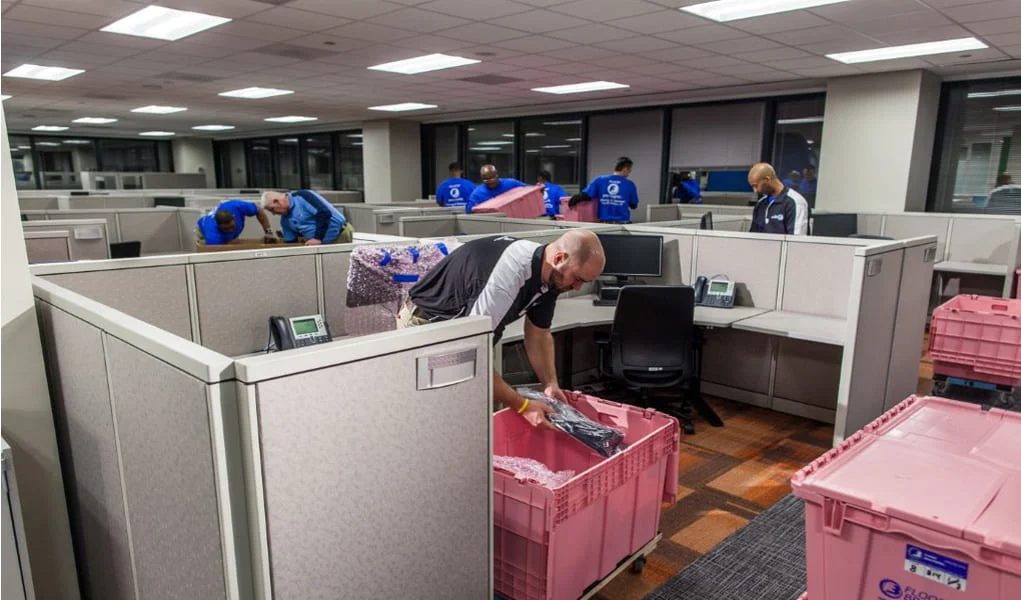
A commercial move rarely fails on moving day. It fails weeks earlier, in a planning meeting that never happened, a cable inventory nobody made, or a lease signed without measuring how people actually work. By the time the trucks show up, the outcome is mostly decided. The good news: the decisions that make or break a relocation are knowable in advance, and you can get every one of them right. After nearly three decades moving offices, warehouses, and labs, we have watched the same ten factors separate the clean relocations from the painful ones.
1. Size the Space Around How You Work, Not a Growth Percentage
Adding 20% headcount does not mean you need 20% more square footage. Floor efficiency depends on layout, ceiling height, column spacing, and how many people share desks on any given day. Walk your current space and count what is actually used. Run a real fit study on candidate buildings before you sign, and plan for the team you will have in three years, not the one you have today.
2. Choose Location With a Scorecard, Not a Gut Feeling
The right address balances competing needs, so put them on paper and weight them. A simple scorecard keeps the decision honest:
- Commute times and where your employees actually live
- Proximity to clients, suppliers, and shipping lanes
- Parking, loading dock access, and freight elevators
- Security, after-hours access, and building operating hours
- Total occupancy cost, including utilities and common-area charges
Score each option against the same criteria and the obvious choice usually stops being obvious in a useful way.
3. Treat the Move as a Chance to Fix Old Habits
A relocation is the rare moment when nothing is fixed in place yet. Use it. If a department has outgrown its corner, if storage swallowed a room nobody enters, or if your meeting rooms never fit the meetings, redesign around the work instead of recreating the floor plan you are leaving. You will not get a cleaner reset for years.
4. Name One Owner and Bring in Specialists
Someone inside your company has to own the move with real authority, a budget, and a calendar. That person should not also be carrying boxes. Pair internal leadership with a commercial mover who relocates businesses for a living. Office furniture systems, server racks, and lab equipment each have their own handling rules, and the cost of learning those rules the hard way is measured in damaged assets and lost days.
What a Single Owner Prevents
When responsibility is split across managers, decisions stall and small gaps turn into moving-day surprises. One accountable owner means one phone number when a vendor has a question and one person tracking every open item to zero.
5. Build a Budget That Accounts for the Hidden Costs
The truck and the crew are the easy line items. The expensive surprises hide elsewhere: IT recabling, new access systems, overtime to move on a weekend, temporary storage, insurance, and the productivity you lose if the schedule slips. Price the whole picture up front. A budget built only on the visible costs is a budget that will be wrong.
6. Lock the Schedule by Sequencing Backward
Pick your first day of full operation in the new space, then work backward. Every dependency gets a date: network live, furniture installed, deliveries staged, old space cleared. Choose vendors with a track record of hitting committed windows, because a single missed handoff cascades into every task behind it. A move with no buffer is a move that has already failed once nothing goes perfectly.
7. Allocate Space by Need, Not by Title
Corner offices for seniority made sense when everyone sat at a fixed desk all day. Many teams now split time between home, the road, and the office, which means private rooms sit empty while collaboration areas overflow. Give space to the work that happens, add the meeting rooms and quiet zones people fight over, and stop paying rent on square footage that exists only to signal rank.
8. Over-Communicate With Your Team
Nothing breeds resistance like silence. Your staff want to know where they will sit, how their commute changes, when they pack, and what stays behind. Share a clear timeline early, explain the reasons behind the move, and name the milestones so people can plan their own work around them. A team that understands the plan helps you execute it; a team kept in the dark slows you down.
- Announce the move and the why before the rumor mill does it for you
- Publish a packing schedule and labeling system everyone follows
- Give each person their new seat and parking details before day one
9. Run the Move Like an Operation, Not an Errand
The day itself rewards planning and punishes improvisation. Equipment gets logged out and logged in. Files and sensitive records move under a chain of custody, not loose in a box. Technology is powered down, transported, and brought back up in a tested order so your phones and systems are live when people walk in. Done right, the move is uneventful, which is exactly the goal.
10. Plan for the Week After You Land
A relocation is not finished when the last truck leaves. Desks need adjusting, a few cables will be in the wrong place, and someone will discover the printer hates its new corner. Keep a small team ready for the punch list instead of declaring victory and walking away. The first week in a new building sets the tone for how your people feel about the entire move, so finish the job.
Get These Ten Right and the Move Takes Care of Itself
None of these keys requires luck. They require an owner, a plan, and a partner who has done this many times before. Flood Brothers has relocated businesses since 1997 with in-house crews, more than 500,000 square feet of warehousing, and 24/7 availability when your schedule demands it. If you are mapping out a relocation, see how our commercial moving services handle the logistics start to finish, and request a free project review or call (866) 528-9137 to talk through your timeline.
Keep Reading

September 22, 2026
Certificates of Insurance for Commercial Moves: What Building Managers Require
The document that stops more move days than weather: what a COI is, what buildings require, and how to get it right the first…
Read more →
September 15, 2026
The Office Relocation Project Plan: Roles, Milestones, and Ownership
Checklists tell you what to do. A project plan tells you who does it and when it must be done. Here is the structure…
Read more →
July 30, 2026
Laboratory Moving Services: Protecting Critical Research Assets During Relocation
Moving a laboratory is one of the most complex relocation projects an organization can undertake. Unlike a traditional office move, laboratories contain sensitive instruments,…
Read more →Trusted by industry leaders
Enterprises that count on Flood Brothers
Your team demonstrated a level of urgency and attention to facility protection that I had not seen before.
We highly recommend Flood Brothers without reservation. They were on time, professional, and customer service-oriented.
We are very fortunate to have Flood Brothers as one of our partners, as they are willing to do whatever it takes to provide quality service.
Let's Plan Your Move
Your Move Deserves More Than a Guess
Book a free project review. We walk the site, scope the work, and return a plan you can hold us to.