

Commercial Moving Process
Our Commercial Moving Process, Start to Finish
Every move runs on a documented, repeatable method, survey, plan, pack, move, install, and verify, owned end to end by one dedicated project manager. The result is a relocation engineered to protect your operations, your timeline, and your team.
-
 On-Site Survey Before We Price
-
 Phased, After-Hours Sequencing
-
 One PM Owns the Whole Project
-
 Walkthrough & Punch List Signed Off
- A site survey and fixed scope before any truck is booked
- A written, department-by-department sequence and schedule
- After-hours and phased moves that protect your workweek
- A walkthrough, punch list, and post-move support window


Why the Process Matters
Downtime Is the Real Cost of a Move, So We Engineer It Out
When a commercial relocation goes wrong, it rarely fails on the truck. It fails in the gaps: the workstation that arrives without its hardware bag, the server that comes back online a day late, the elevator that was never reserved, the crew that shows up before the new floor is ready. Every one of those gaps is an hour your people cannot work, and for a business of any size, lost hours are the most expensive thing about moving.
Flood Brothers treats relocation as a managed project, not a pickup. Before we move a single item we survey both sites, build a sequence, and assign one project manager who carries the job from the first walkthrough to the final sign-off. Because our crews and furniture installers are our own in-house employees, the plan that gets written is the plan that gets executed, the same people, following the same documented method, every time.
This page walks through that method step by step, so you can see exactly how a Flood Brothers move protects your operation. It is the same process whether we are handling an office relocation, a warehouse relocation, or a multi-site rollout across the country.
The Six-Step Method
From First Survey to Final Sign-Off
-
Discovery & Site Survey
A project manager walks the origin and destination, documents assets and access, and confirms docks, elevators, insurance requirements, and building rules before quoting.
-
Planning & Sequencing
We build one written plan covering floor placement, department phases, crews, equipment, and timing, then schedule around your operation so teams stay productive.
-
Packing, Labeling & Crating
Reusable crates, destination-based labels, protective wrap, and documented handling give every asset a known origin, destination, and level of protection.
-
The Move, After-Hours & Phased
Crews execute the approved sequence during evenings or weekends when needed, with one project manager coordinating access, docks, transport, and each controlled phase.
-
Install & Reconnection
Our installers rebuild workstations and shared spaces to plan, place every labeled asset, and coordinate technology reconnection so the new space is ready to work.
-
Walkthrough, Punch List & Support
We walk the completed space with you, resolve the punch list, confirm placement and connectivity, and remain available for post-move adjustments.

One Point of Contact
A Dedicated Project Manager Owns It, End to End
Most of what goes wrong in a move is a communication problem, too many vendors, too many hand-offs, and no single person accountable when something slips. We solve that structurally. Every Flood Brothers relocation is assigned one project manager who is your single point of contact from the first survey through the final punch list.
That PM writes the plan, sizes the crews, coordinates with your IT team and building management, runs the schedule the night of the move, and signs off the walkthrough with you. There is one name and one number to call, no chasing a dispatcher, no repeating your requirements to a new face each day. The continuity is the safeguard: the person who promised the plan is the person who delivers it.
The Goal of the Whole Method
A Move You Barely Feel
Done right, a commercial move is almost invisible to the people living through it. The lights go off on a Friday in one space and come back on Monday in another, where every desk is built, every cable is run, and every box is already where it belongs. No weekend spent hunting for the monitor cables. No Monday lost to setup. No project that drags into a third week.
That is what the survey, the sequence, and the single point of contact are all for. The process exists so the outcome feels effortless, so your team experiences a change of address, not a disruption to the business.
Inside the Move Plan
What the Written Plan Actually Covers
The plan your project manager hands you before move day is a working document, not a one-line confirmation. It accounts for every variable that can cost you time or money, including:
- Labeled destination floor plan, every workstation, office, and zone mapped so crates and furniture land in the right spot the first time.
- Phased move sequence, the order departments shut down and come back online, engineered around what has to stay live.
- Crew, truck & equipment counts, the right number of installers, vehicles, dollies, and protection staged for the job size.
- Building logistics, reserved dock times, elevator and freight access, loading windows, and certificate-of-insurance coordination with both landlords.
- IT & phone cutover, disconnect and reconnection timing coordinated with your IT team or provider so systems are live for day one.
- Labeling & chain of custody, color-coded crate system tracking sensitive files, electronics, and specialty equipment from origin to destination.
- Walkthrough & punch-list criteria, the sign-off checklist we hold the move to before the PM calls it complete.
The same planning discipline scales up for specialty work, ask your PM about warehouse relocations and office moves handled inside the same project.
The Process, Backed by Resources
A Method That Holds Up at Scale
- 220+ Full-Time In-House Crew The same trained people who plan your move execute it.
- 500K+ Sq Ft of Warehousing Secure space to stage and sequence between phases.
- 24/7 After-Hours Crews Nights and weekends to protect your workweek.
- 50 States Covered The same documented method on single-site or national rollouts.

Built Around Your Hours
After-Hours and Phased, So Business Keeps Running
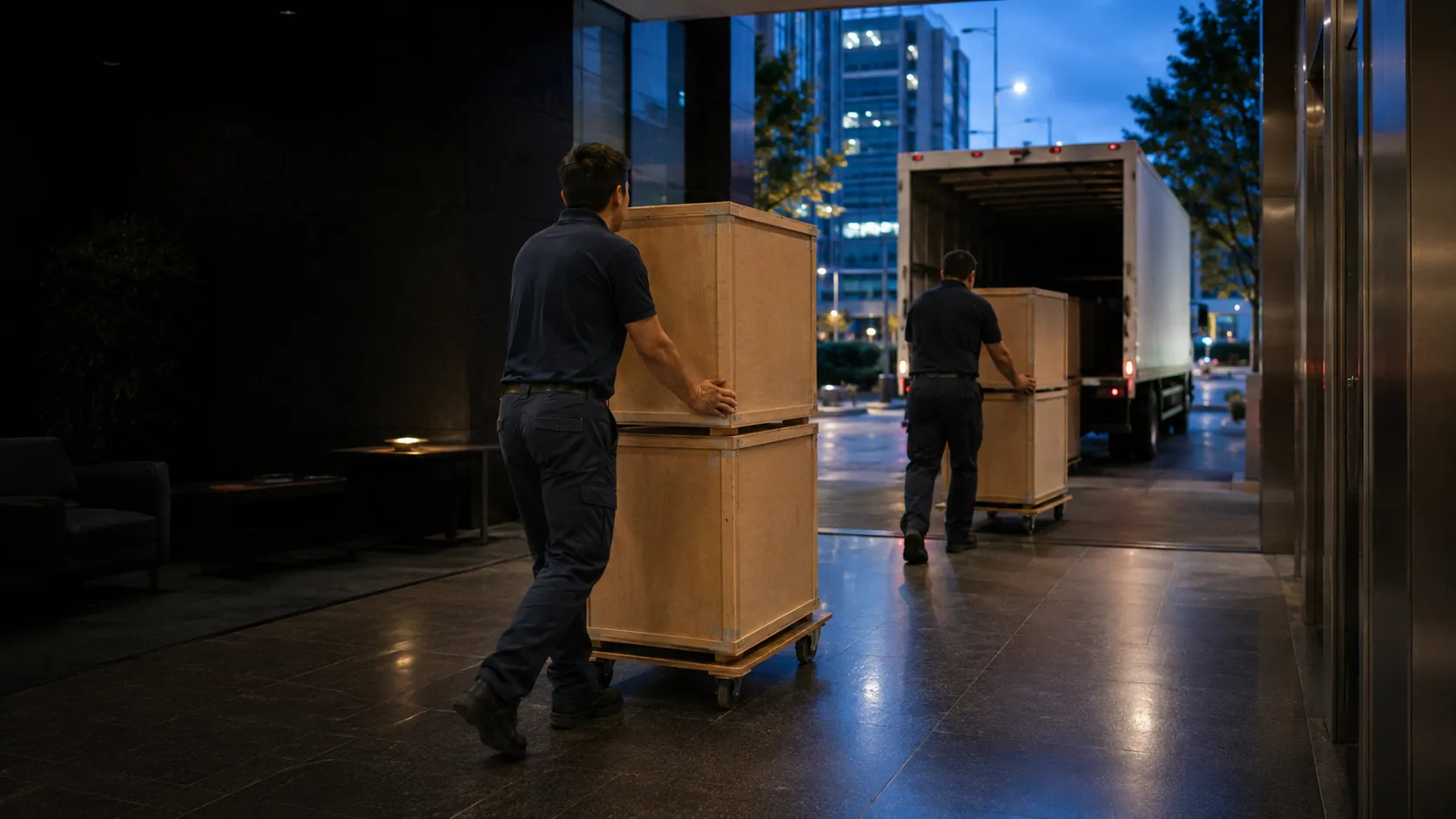
The single biggest lever for protecting your operation is when the work happens. We schedule the bulk of every move into evenings, overnights, and weekends, and we break the relocation into phases so the business never goes fully dark.
Phasing means we move one department, floor, or function at a time, in a controlled order the plan defines. While one group is being relocated and reinstalled, the rest keep working. You tell us what must stay live and when; we engineer the sequence to match, so the people who relied on those phones, desks, and network connections never notice they moved.
Questions & Answers
Commercial Moving Process: Straight Answers to Common Questions
General
-
A project manager walks both the origin and destination in person to measure spaces, inventory furniture and equipment, and confirm access, docks, elevators, loading windows, and building rules. The survey is what makes a fixed, accurate pricing possible instead of a guess, so it is a standard first step on every project.
-
We sequence the move department by department or floor by floor based on what has to stay live and when. The plan defines the order each group shuts down and comes back online, and we run most of the work after hours so the controlled sequence never collides with your business day.
-
Three things: we move the bulk of the work into evenings and weekends, we phase it so the business is never fully dark, and we reconnect IT and phones as part of the sequence so systems are live for day one. The whole method is built to compress the hours your team cannot work down to as close to zero as possible.
-
One dedicated project manager owns the job from the first survey through the final punch list. That PM writes the plan, runs the schedule on move night, coordinates with your IT team and building management, and signs off the walkthrough with you. One name, one number, no chasing a dispatcher.
-
Every asset is packed to a consistent system: reusable crates, color-coded labels keyed to the destination floor plan, and protective wrap on furniture, glass, and electronics. Sensitive files and specialty equipment are crated and chain-of-custody tracked, so each item has a known origin and a known home before it ever leaves the building.
Let's Map Your Move
Ready to See the Process Applied to Your Project?
Tell us about your spaces and timeline. We'll survey both sites, build the sequence, and send clear, fixed pricing, usually within one business day.