
Common Mistakes Businesses Make During Office Furniture Installation
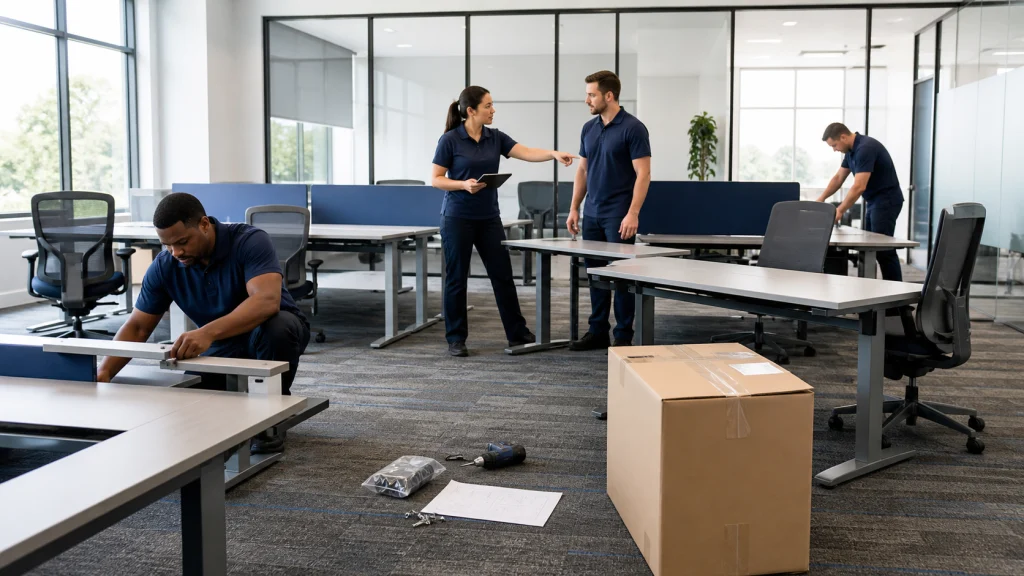
You signed the lease, ordered the workstations, and picked a move-in date. Then the freight elevator was already booked, half the cubicles showed up missing hardware, and your crew stood around for two hours because the electrician never finished the floor boxes. Office furniture installation looks like assembly work, but the problems that actually cost you money happen in the planning, scheduling, and coordination around it. Most of those problems are completely avoidable once you know where they hide.
The Mistakes That Wreck Office Furniture Installs
After nearly three decades moving and installing furniture for commercial clients, we see the same failures repeat across industries and building types. Here are the ones that do the most damage.
1. Treating Planning as an Afterthought
A furniture install is not one task. It is a chain of dependencies: delivery windows, building access, power and data drops, HVAC zoning, and the crew schedule all have to line up. When you skip the detailed timeline and just point at a calendar date, you get idle labor, blocked corridors, and a move-in date that slips by a week.
Before anything ships, map the dependencies. Confirm that electrical capacity, data connectivity, and climate control will be ready in each zone on the day furniture lands there. A plan that accounts for the whole space, not just the furniture, is what keeps the project on the rails.
2. Letting Vendors Run on Separate Tracks
This is the single most common reason installs fall apart. The furniture dealer, the IT cabling team, the electricians, and the movers each work to their own schedule and assume someone else is handling the overlap. So the furniture arrives Tuesday, the install crew shows up Wednesday, and the power that was supposed to be live Monday is still three days out.
One coordinator owning the entire scope fixes this. When a single point of contact controls the sequence and the hand-offs, the conflicts get caught on paper instead of on the floor.
3. Skipping Real Measurements and a Site Survey
Eyeballing a floor plan is how you end up with returns, reorders, and a stalled project. A desk run that is two inches too long for the wall, a reception piece that will not clear the doorway, a conference table that cannot make the turn out of the elevator: all of it traces back to measurements that were never verified.
- Confirm finished wall-to-wall dimensions, not the architect’s intended ones.
- Measure doorways, elevator cabs, stairwells, and ceiling heights along the full path.
- Walk the route from the loading dock to each final location and note every pinch point.
- Account for column placement, baseboard heaters, and outlets that eat usable wall space.
4. Ignoring the Building’s Rules
Every commercial building has its own restrictions, and they will stop your install cold if you find out about them on delivery day. Freight elevators often need to be reserved days ahead. Loading docks run on tight scheduling windows. Some buildings require union labor or proof of insurance from anyone working on site. Fire and life-safety codes dictate how you stage materials in corridors.
Get the certificate of insurance, the dock schedule, the elevator reservation, and the building’s labor requirements in writing before you commit to a date. A single missed rule can shut down the entire operation.
5. Scheduling Deliveries Before the Space Is Ready
Furniture that arrives into an unfinished space is furniture you pay to store, move twice, or watch get damaged. If drywall is still going up, paint is wet, or carpet has not been laid, your install crew either waits on the clock or works around hazards and dust that will end up on every surface you just installed.
Sequence deliveries to follow the trades, not race them. Build in a buffer for the inevitable construction slip, and stage furniture off-site if the site is not genuinely ready.
6. Underestimating the Skill the Install Actually Takes
Modular systems furniture is not flat-pack from a big-box store. Each manufacturer’s product line has its own connectors, panel systems, and assembly sequence, and getting it wrong voids the warranty you paid for. A rushed crew that forces parts or skips manufacturer steps creates wobbling workstations, misaligned panels, and safety hazards.
- Crews need the specialized tools each furniture system requires.
- Installers should know the manufacturer guidelines for the specific product lines on site.
- OSHA-compliant handling protects both your people and your warranty.
- Ergonomic positioning matters: monitor arms, keyboard trays, and chair setup affect comfort from day one.
7. Calling It Done Without a Final Walkthrough
The temptation at the end of a long install is to hand over the keys and leave. Skip the inspection and you discover the problems months later, after the warranty window has narrowed and the dealer is harder to reach. A real close-out catches the small defects while they are still easy to fix.
- Test every moving part: drawers, doors, height-adjustable bases, and locks.
- Verify that panels, overheads, and shelving are properly secured and level.
- Document any damaged or missing components and log the punch list in writing.
- Confirm the final layout matches the approved floor plan before crews leave.
How to Get It Right the First Time
The thread running through every one of these mistakes is the same: fragmented responsibility. When planning, coordination, measurement, and installation all sit with different people who never talk, the gaps between them become your delays and your damage. Put one experienced team in charge of the whole sequence and most of these failures simply never happen.
That is the model we have used for commercial clients since 1997. Flood Brothers runs the project end to end with in-house crews, a single coordinator, and over 500,000 square feet of warehousing to stage your furniture until your space is genuinely ready. We handle the building requirements, the sequencing, and the close-out so your team walks into a finished office instead of a job site.
Planning a move or a buildout? See how our office furniture installation service keeps your project on schedule, then request a free project review or call (866) 528-9137 to talk through your timeline.
Keep Reading
May 5, 2026
How to Prepare Fitness & Medical Equipment for a Commercial Move
A practical guide to protecting treadmills, imaging machines, and calibrated medical gear during a commercial relocation without costly downtime.
Read more →
January 20, 2026
FF&E Installation in 2026: The Most Common Delays and How to Avoid Them
FF&E installation delays rarely come out of nowhere. Here are the five most common causes in 2026 and the practical steps that keep your…
Read more →
August 28, 2025
What Is FF&E? Why Furniture, Fixtures & Equipment Can Make or Break Your New Commercial Space
FF&E covers the furniture, fixtures, and equipment that turn an empty building into a working space. Get the timing wrong and your opening date…
Read more →Trusted by industry leaders
Enterprises that count on Flood Brothers
Your team demonstrated a level of urgency and attention to facility protection that I had not seen before.
We highly recommend Flood Brothers without reservation. They were on time, professional, and customer service-oriented.
We are very fortunate to have Flood Brothers as one of our partners, as they are willing to do whatever it takes to provide quality service.
Let's Plan Your Move
Your Move Deserves More Than a Guess
Book a free project review. We walk the site, scope the work, and return a plan you can hold us to.