
The Complete FF&E Guide for Commercial Projects
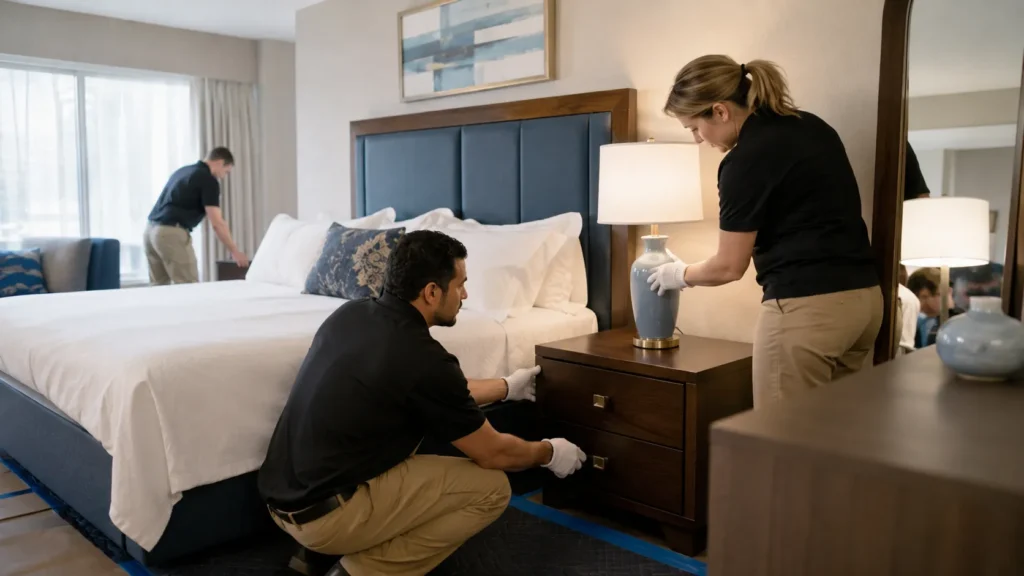
Your building is finished, the lease is signed, and the opening date is circled on every calendar in the company. Then 300 chairs, 40 desks, custom millwork, and a freight elevator’s worth of equipment all need to land in the right rooms, assembled and ready, in a narrow window. This is the stage where commercial projects quietly fall apart, and it almost always traces back to how the FF&E was planned and installed. Getting it right is the difference between opening on time and explaining to leadership why you didn’t.
What FF&E Actually Means
FF&E stands for Furniture, Fixtures, and Equipment, sometimes written as FF&A when “Accessories” replaces “Equipment.” In accounting and project terms, it covers the movable and semi-permanent items that turn an empty shell into a working space. The category is broader than most people expect, and the line between “part of the building” and “part of the FF&E budget” is exactly where disputes start.
- Furniture: Desks, workstations, conference tables, seating, lounge pieces, shelving, and reception furniture.
- Fixtures: Items attached to the building but not structural, such as lighting, signage, built-in casework, display systems, and certain plumbing elements.
- Equipment: The functional gear a space needs to operate, including AV systems, kitchen and lab equipment, point-of-sale hardware, and specialized machinery.
For finance, FF&E matters because these are depreciable assets separate from the real estate itself. For operations, it matters because nothing in that list ships, stages, or installs on its own. Each piece has a lead time, a delivery requirement, and an installation sequence that has to mesh with everyone else working in the building.
The Six Phases of an FF&E Project
Whether you’re outfitting one office or rolling out 50 retail locations, the work moves through the same phases. Problems compound when teams treat the early phases as paperwork and the later ones as someone else’s job.
1. Planning and Specification
Every item gets defined: model, finish, dimensions, quantity, and the room it belongs in. A clean FF&E schedule at this stage prevents the expensive guesswork that shows up on delivery day. This is also where you confirm that what’s specified actually fits through the door and into the space.
2. Selection and Procurement
Vendors are chosen, purchase orders issued, and lead times locked. Long-lead items such as custom seating or specialized equipment can run 12 to 20 weeks, so procurement decisions made late here ripple straight into your opening date.
3. Delivery and Receiving
Freight arrives, often from dozens of manufacturers on different schedules. Without a receiving plan, the loading dock becomes a bottleneck and the jobsite fills with cardboard, blocking the trades still trying to finish.
4. Warehousing and Staging
Most FF&E ships before the site is ready to receive it. That gap is where secure, climate-appropriate storage earns its keep. Staging product in sequence, then releasing it to the site just in time, keeps the install moving instead of stalling.
5. Installation
Items are assembled, placed, leveled, and connected in the right order. Get the sequence wrong and crews end up moving the same heavy pieces twice.
6. Closeout
Debris is removed, items are inspected against the schedule, damage is documented, and the space is turned over clean and ready to use.
Where FF&E Projects Go Wrong
Budgets and timelines rarely blow up because of one large mistake. They erode through a series of avoidable ones, and the same handful show up on project after project.
- No staging plan. Product arrives weeks early with nowhere to go, so it sits in hallways, gets damaged, or racks up storage fees nobody budgeted for.
- Receiving treated as an afterthought. Pallets show up unannounced, paperwork doesn’t get checked against the order, and shortages aren’t caught until installers are standing in an empty room.
- Wrong installation sequence. Furniture goes in before flooring is protected, or heavy equipment lands before the path to its final position is clear.
- Damage discovered too late. A scratched conference table found during closeout means a replacement lead time you no longer have.
- Underestimating labor. A crew that’s right for a 20-piece office is the wrong fit for a multi-floor rollout, and the schedule pays for the mismatch.
Every one of these traces back to logistics, not the furniture itself. The product is rarely the problem. The handling around it is.
Why Professional Installation Pays Off
It’s tempting to treat FF&E install as a delivery task and hand it to whoever is cheapest. On a small job that can work. On anything with real volume, a coordinated installation partner changes the economics.
- One point of accountability. Instead of chasing freight carriers, assembly crews, and storage vendors separately, you have a single team responsible for product arriving, staging, and going in correctly.
- Protected timelines. Experienced installers sequence the work around the other trades, so your FF&E phase supports the opening date instead of threatening it.
- Budget predictability. When delivery, warehousing, and labor are planned together, you avoid the on-the-fly fixes (rush storage, emergency labor, reorders) that quietly wreck a budget.
- Damage handled properly. Trained crews inspect on receipt, document issues immediately, and protect finished surfaces during install, which keeps replacement costs and delays off your plate.
What to Look For in an FF&E Partner
Not every moving company can handle a commercial FF&E install, and the gaps show up under pressure. Before you sign, confirm the partner brings the things that actually protect your project:
- In-house crews, not day labor pulled together per job, so the people handling your assets are trained, vetted, and accountable.
- Secure warehousing with enough capacity to receive and stage product well ahead of your install window.
- Receiving and inventory systems that check every delivery against the FF&E schedule and flag shortages or damage on day one.
- Around-the-clock availability, because the cleanest installs often happen overnight or on weekends to avoid disrupting an operating site.
- A track record with projects at your scale and complexity.
Flood Brothers has been handling commercial relocation and logistics since 1997. Our in-house employee crews, more than 500,000 square feet of secure warehousing, and 24/7 operations are built for exactly this kind of work: receiving FF&E early, staging it safely, and installing it on a schedule that protects your opening date.
Planning a buildout, relocation, or multi-site rollout? Learn how our FF&E installation services keep your project on track, or request a free project review to talk through your timeline. Call (866) 528-9137 to get started.
Keep Reading

May 12, 2026
Common Mistakes Businesses Make During Office Furniture Installation
The most expensive office furniture installation problems start long before a single workstation is assembled. Here is what to watch for and how to…
Read more →
May 5, 2026
How to Prepare Fitness & Medical Equipment for a Commercial Move
A practical guide to protecting treadmills, imaging machines, and calibrated medical gear during a commercial relocation without costly downtime.
Read more →
January 20, 2026
FF&E Installation in 2026: The Most Common Delays and How to Avoid Them
FF&E installation delays rarely come out of nowhere. Here are the five most common causes in 2026 and the practical steps that keep your…
Read more →Trusted by industry leaders
Enterprises that count on Flood Brothers
Your team demonstrated a level of urgency and attention to facility protection that I had not seen before.
We highly recommend Flood Brothers without reservation. They were on time, professional, and customer service-oriented.
We are very fortunate to have Flood Brothers as one of our partners, as they are willing to do whatever it takes to provide quality service.
Let's Plan Your Move
Talk to the Team That Does the Work
No brokers and no handoffs. Tell us your timeline and our own crew leads will map the project with you.