
Moving Into a High-Rise Office: Elevators, Loading Docks, and Building Rules
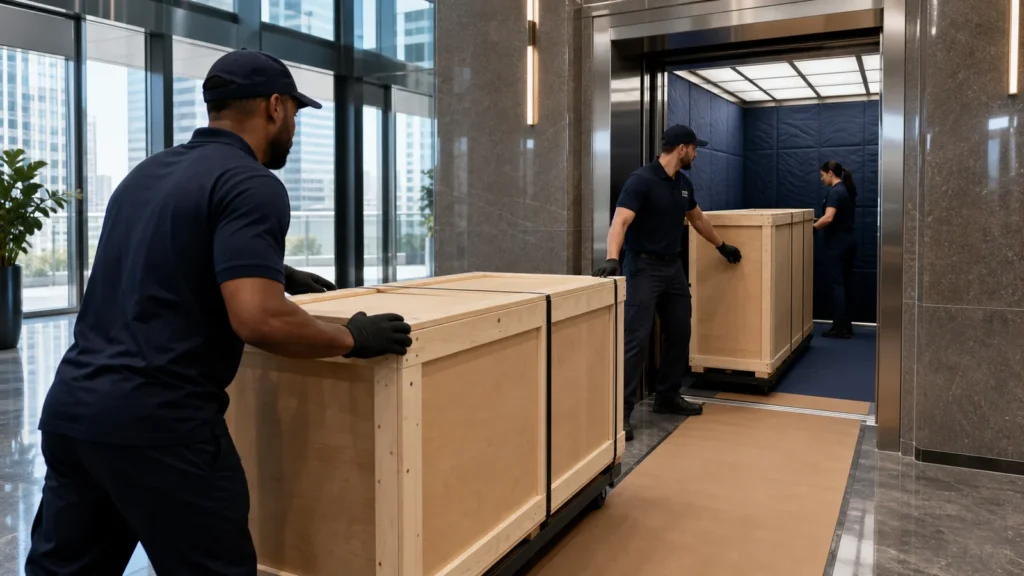
Moving into a high-rise is a different sport from moving into a suburban office park. The distance your belongings travel horizontally might be three miles; the distance that determines your schedule is the forty vertical feet between the dock and your floor, traveled one freight elevator load at a time. Plan around the vertical constraint and everything else follows.
The freight elevator is the whole ballgame
A typical freight elevator cab moves one crew’s load every seven to ten minutes once you account for loading, travel, and unloading. Multiply that by the number of trips your contents require and you have the real duration of your move, no matter how many trucks sit at the dock. Experienced movers calculate trip counts from the inventory before quoting a tower job. Ask for that math; if a bidder has not done it, their schedule is a guess.
Reserve the elevator the moment your move date firms up. In busy towers the freight car books out two to four weeks ahead, and many buildings only grant it after hours: evenings and weekends, sometimes with a building engineer on the clock at your expense.
Dock rules, protection, and the paperwork
The loading dock has its own reservation system and its own constraints: truck height limits, time-boxed windows, and shared use with daily deliveries. Buildings also require masonite floor protection along the entire travel path, padded elevator cabs, and corner guards in corridors, and they will inspect. Add the certificate of insurance approval loop, and you should be working the building’s logistics a month out. Our guide to office relocation planning covers how these dates ladder into the master schedule.
Sequencing a multi-floor move
When your company takes several floors, resist the urge to move floor by floor in building order. Sequence by business function instead: the teams that must be operational Monday morning move first and get their IT reconnected first, while storage rooms and archives ride the late trips. A good mover will build the elevator schedule around your operational priorities, not around what is easiest to load.
What experienced tower crews do differently
- They stage loads at the dock sized exactly to the elevator cab, so no trip travels light.
- They run split crews, one loading at the dock, one placing upstairs, so the elevator never waits on people.
- They protect surfaces once, correctly, at the start, instead of negotiating with building security at 7 p.m.
- They know that furniture installation in a tower means staging components in the right order, because bringing a forgotten beam up 32 floors costs half an hour.
Plan the vertical move with people who do it weekly
Flood Brothers crews work high-rise buildings across our markets every week, and our project managers speak fluent property management: COIs, dock windows, protection specs, and engineer schedules. Since 1997 we have moved businesses into towers with in-house crews trained for exactly this work. If your next address has a floor number in it, request a project review and we will bring the elevator math.
Keep Reading

September 8, 2026
Vetting a Moving Partner in Atlanta: Questions to Ask First
Atlanta buildings, Atlanta traffic, and Atlanta timelines all shape which commercial mover can actually deliver. Here is how to vet them.
Read more →
June 30, 2022
Permanent Remote vs. Hybrid: What to Do With Your Office Space
Choosing between permanent remote and hybrid work changes everything about your office space. Here's how to right-size and plan the move.
Read more →
June 2, 2022
The Office Move Checklist: A Practical Timeline for Relocating Your Business
A practical, phase-by-phase office move checklist that keeps your lease, IT systems, and reopening date on track from six months out through day one.
Read more →Trusted by industry leaders
Enterprises that count on Flood Brothers
Your team demonstrated a level of urgency and attention to facility protection that I had not seen before.
We highly recommend Flood Brothers without reservation. They were on time, professional, and customer service-oriented.
We are very fortunate to have Flood Brothers as one of our partners, as they are willing to do whatever it takes to provide quality service.
Let's Plan Your Move
One Call Starts the Plan
Share your dates and your space. We come back with a written plan, usually within one business day.