
Bars, Breweries & Taprooms
Bar and Brewery Relocation: The Tanks Are the Hard Part
For the owner or operations lead moving a brewhouse and a taproom at once, on a reopening date that payroll already assumes. Here is what that job needs: riggers who measure the path before booking the crane, finish protection on the customer-facing side, and a realistic view of what your licensing timeline does to the schedule.
-
 In-House Tank and Vessel Rigging
-
 Taproom Finishes Protected
-
 Path Measured Before Crane Booked
-
 Built Around Your Reopening
- Written for the owner carrying the reopening date
- Fermenters, brites and kettles moved by our own riggers
- Back-bar and millwork protected like the asset it is
- Straight talk about licensing and what it does to timing


Who This Page Is For
If You Are Moving a Brewhouse and a Dining Room at the Same Time
A brewery relocation is two different projects sharing one deadline. Behind the wall it is heavy industrial rigging: vessels that weigh thousands of pounds, glycol and draft lines, a cellar full of kegs. Out front it is a hospitality fit-out where the finishes are the product, and a scratched die-wall or a chipped stone bar top is something your customers see on day one.
Most moving companies are set up for one of those and improvise the other. That is where brewery projects go wrong: a rigging outfit that treats the back-bar like freight, or a general crew that discovers a 30-barrel fermenter does not fit through the door they planned on.
The question is whether we are the right fit for both halves. The rigging methodology lives on our industrial rigging service page, and the front-of-house install detail is on commercial kitchen and FF&E installation.
Trusted by industry leaders
Enterprises that count on Flood Brothers
Your team demonstrated a level of urgency and attention to facility protection that I had not seen before.
We highly recommend Flood Brothers without reservation. They were on time, professional, and customer service-oriented.
We are very fortunate to have Flood Brothers as one of our partners, as they are willing to do whatever it takes to provide quality service.
Get Started
Ready to Move Your Bar or Brewery?
Tell us about your project and we'll follow up with next steps, usually within one business day.
(866) 528-9137
Thank you
Request Received
Most inquiries are reviewed within 1 business day.
Response in 1 business day or less

Heavy Vessel Rigging
Fermenters and Brite Tanks Moved by Riggers, Not a General Crew
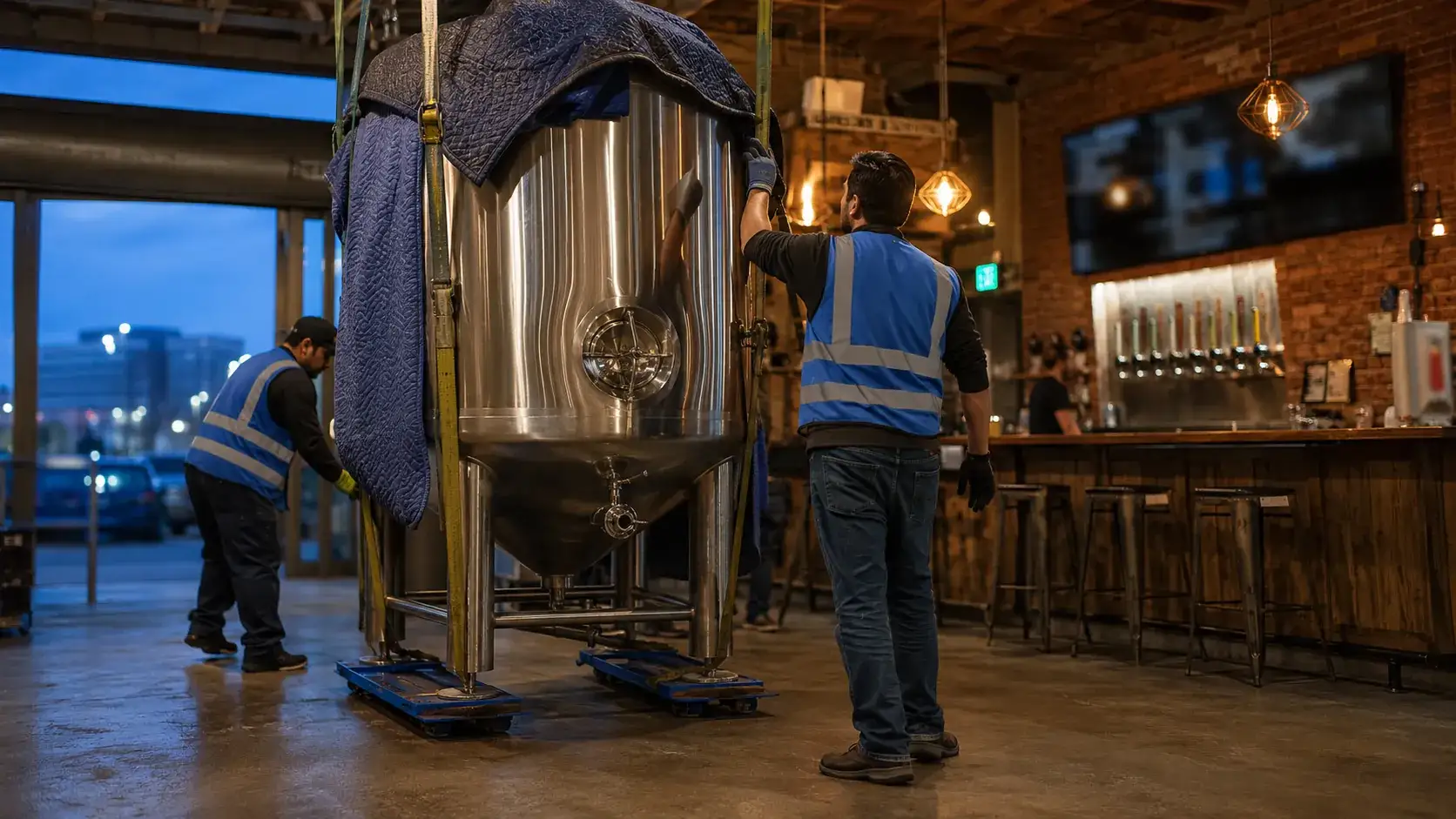
A 30-barrel fermenter does not fit through a standard doorway, does not like to be tilted, and will not forgive a crew that improvises. Our in-house riggers move brewing vessels the way the equipment demands, rated lifting and rigging gear, planned routes through docks and corridors, and controlled placement onto pads, skids, or saddles in the new brewhouse.
Brite tanks, mash tuns, kettles, glycol chillers, and grain silos get the same treatment: surveyed, protected, rigged, and set without dragging, racking, or dropping. Because the riggers are our employees, the same people who plan the lift are the ones who execute it. Tanks arrive upright, undamaged, and positioned so your trades can tie them back in.
How a Brewery Move Runs
From Last Pour to First Pour, on a Sequence That Holds
-
Survey & Rigging Plan
We walk both sites, measure doorways and dock access, inventory tanks, draft, coolers, and FF&E, and build a written rigging and reinstall plan with fixed pricing.
-
Disconnect & Protect
Working with your trades, we drain and disconnect, then label and protect glycol, draft, and cooler components and lay floor and corner protection at both sites.
-
Rig, Transport & Place
Our riggers move the heavy vessels and our installers handle the bar and FF&E, transporting everything and setting each piece to the new floor plan.
-
Reinstall & Hand Off to Trades
We reinstall the bar, back-bar, and fixtures and stage equipment for hookup, then hand off to your plumbing, electrical, and refrigeration specialists for recommissioning.

The Customer-Facing Side
Your Back-Bar and Taproom Come Back Looking the Way Guests Remember
The brewhouse is where the beer is made; the taproom is where it is sold. The finished back-bar, die-wall, draft towers, stone or reclaimed-wood tops, booths, communal tables, and signage are the face of your brand, and a single gouge on the bar top is the kind of thing customers notice. Our in-house installers move and reinstall that finished FF&E like the high-value millwork it is.
We pad and crate the delicate pieces, protect floors and door jambs along the route, and reassemble the bar and seating to your layout so the room reads exactly as it did before the move. Reach-in coolers, kegerators, and glass-door merchandisers are kept upright to protect compressors and seals. The same finish-protection standard runs through our restaurant and kitchen relocation work, so front-of-house and back-of-house move on one coordinated plan.
The Constraint Owners Underestimate
Your Licence Does Not Move With Your Equipment
We are movers and riggers, not your attorney, so take this as pattern recognition from projects rather than legal advice. The pattern is consistent enough to plan around.
A brewery licence and a liquor licence are generally tied to a specific premises. Moving to a new address usually means a new or amended licence rather than a transfer, and at the federal level a brewer’s notice has to reflect the new location before you can legally brew there. State and local alcohol boards add their own approvals, and some of those run on monthly meeting calendars rather than on processing times, which is the detail that surprises people.
The practical consequence is that the equipment is often ready before the paperwork is. We plan for that gap instead of pretending it does not exist: staging equipment in our warehouse, sequencing the install so the taproom can open on schedule even if brewing starts later, and being blunt in week one about which date is actually the binding one. Talk to your attorney early, and let us build the physical schedule around what they tell you.
What's Included
From the Fermenters to the Taps, Handled by One Team
Heavy rigging and finish protection under a single accountable plan.
-
Tank & Vessel Rigging
Fermenters, brite tanks, mash tuns, kettles, and glycol chillers rigged, routed, and set with rated gear, no dragging, racking, or dropping.
-
Draft & Glycol Systems
Tap towers, draft lines, and glycol lines labeled, protected, and staged, then handed to your trades for clean reconnection and balancing.
-
Refrigeration & Coolers
Walk-ins, reach-ins, kegerators, and glass-door merchandisers moved upright and stable to protect compressors, panels, and door seals.
-
Kegs, Cellar & Packaging
Kegs, racking, canning and bottling lines, and cellar gear moved and staged so the production side comes back online in the right order.
-
Bar FF&E & Millwork
Back-bar, die-wall, stone and wood tops, booths, and taproom furniture reinstalled by in-house crews without marring finishes.
-
Receiving, Warehousing & Staging
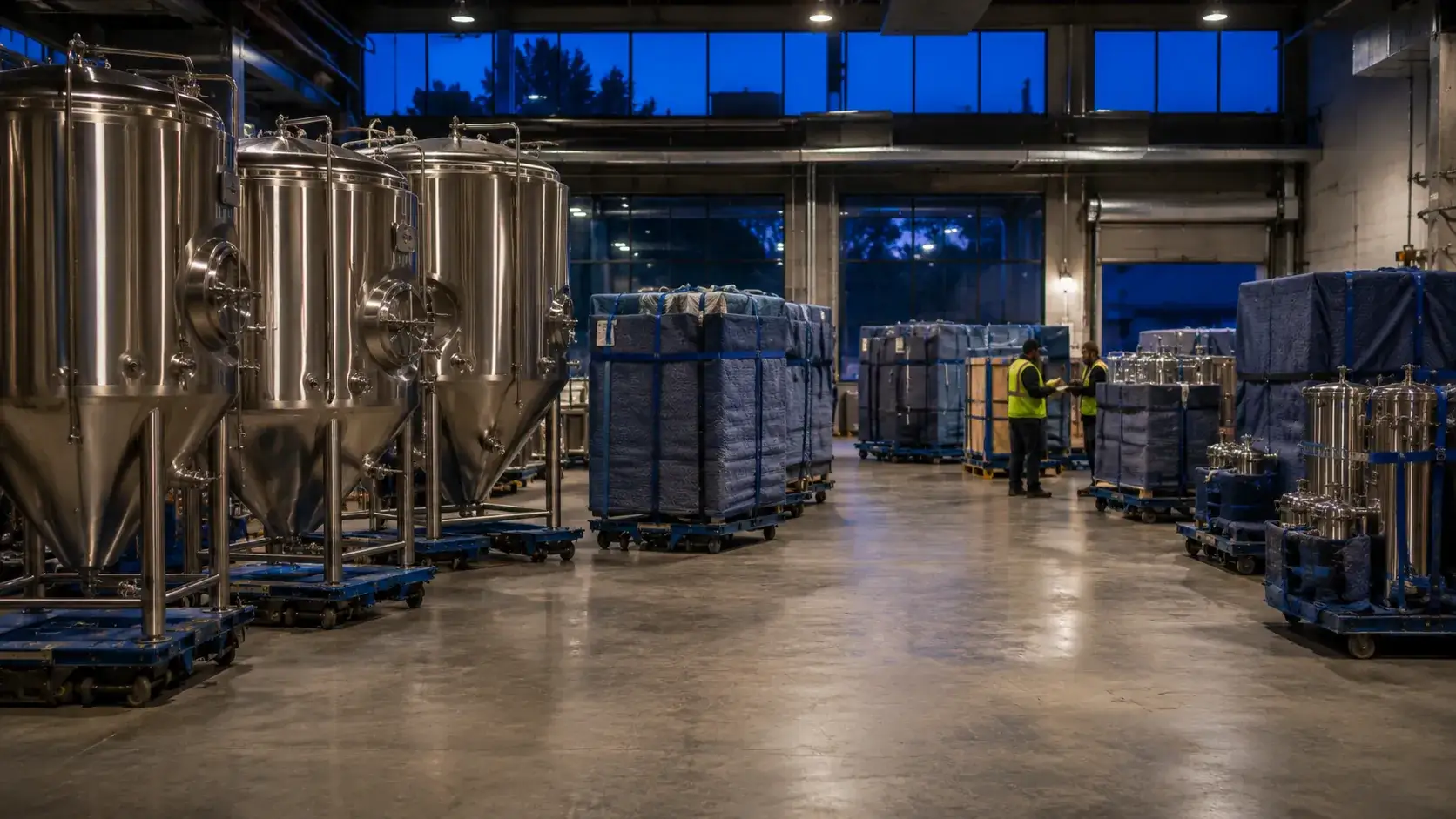
Build-out running long? We receive and store tanks, coolers, and FF&E in secure warehousing and sequence the reinstall when you are ready.
The How Lives Next Door
You Want the Rigging Detail, Not Another Overview
Fit comes first. The operational specifics live on the service pages.
- Industrial rigging covers vessel handling, crane and gantry work, and moving equipment through constrained paths.
- Kitchen and FF&E installation covers the taproom, back-bar and food service side.
- Receiving and secure storage is where tanks wait when the build-out or the licence runs long.
- Decommissioning and liquidation covers stripping the old location and what happens to equipment you are not keeping.
Why Owners Trust Us
Equipment-Handling Experience You Can Rely On
- 100% In-House Rigging & Install Handled by our own in-house crews.
- 500K+ Sq Ft of Warehousing Receive and stage equipment until your space is ready.
- 24/7 After-Hours Crews Nights and weekends to protect your operating hours.
- 95% of the U.S. Within Crew Reach Single taproom or multi-location operation.
Questions & Answers
Bar And Brewery Relocation: Straight Answers to Common Questions
General
-
Yes, with our own in-house riggers rather than a subcontracted crane crew. The real question is never whether the tank can be lifted, it is whether there is a path. We measure doorways, turns, ceiling heights and dock access at both ends before anything is booked, because a vessel that will not fit the path is the single most common way a brewery move goes sideways.
-
We move, protect and reinstall the physical draft towers, lines and glycol runs, labeled so they go back the way they came out. Final connections, gas work and anything requiring a licensed trade stay with your licensed trades. We sequence so those people arrive when the equipment is actually set and ready for them.
-
That is the part we protect hardest, because it is the part your customers judge. Back-bar, die-wall, stone and wood tops, booths and banquettes are padded, crated where needed, and moved on a separate protected path from the heavy equipment. Custom millwork is usually irreplaceable on your timeline, so we treat it as the fragile asset rather than the furniture.
-
Shorter than most owners fear on the taproom side and longer than they hope on the brewing side. The taproom can often reopen well before brewing restarts, because the front of house depends on install and inspection while brewing depends on your licensing. We plan those as two separate dates on purpose, so you are earning from the bar while the brewhouse comes online.
-
Yes, and plan on it. Between construction overruns and licensing timelines, brewery projects sit in a waiting state more often than not. Equipment goes into secure warehousing, inventoried, and comes out in the order the install needs rather than all at once into a space that is not ready for it.
Plan the Reopening
Tell Us Your Vessels and Your Reopening Date
Send us your equipment list, both locations and where you are in licensing. We will walk the rigging path, tell you which date is actually binding, and come back with a written sequence and clear pricing, usually within one business day.