
The Real Benefits of Last-Mile Delivery for Commercial Operations
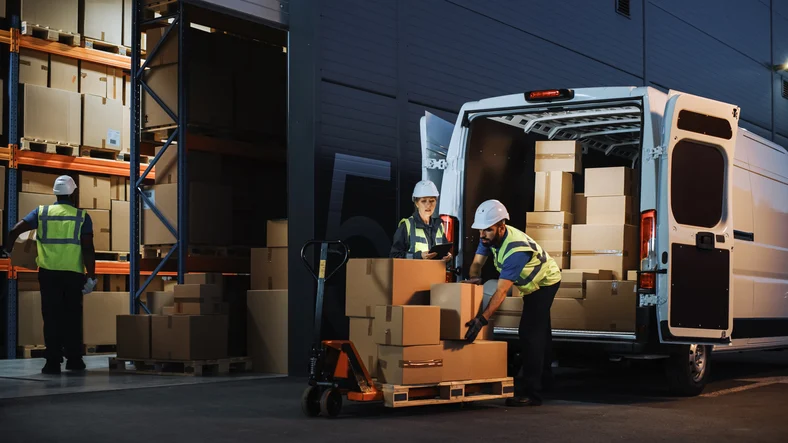
You can run a flawless operation right up until the truck pulls off the highway, and still lose the customer in the final few miles. The last mile is where tight delivery windows collide with downtown loading docks, white-glove installs, and freight that costs more than the vehicle carrying it. It is also the part of the supply chain your customer actually sees. Get it wrong and the rest of your performance barely registers. Get it right and you build the kind of reliability that keeps contracts renewing.
What “Last-Mile Delivery” Actually Means in a Commercial Context
Last-mile delivery is the final leg of a shipment’s journey, moving goods from a regional warehouse or distribution hub to their destination. For consumer e-commerce that destination is a front porch. For commercial and B2B operations it is something far more demanding: a hospital receiving dock, a retail buildout, a corporate office relocation, or a job site with a two-hour delivery window and a fork truck waiting.
That difference matters. Commercial last-mile work routinely involves oversized freight, scheduled appointments, certificates of insurance, dock coordination, and product that needs to be placed, assembled, or staged rather than just dropped. The miles are short. The complexity is not.
Why the Last Mile Decides Your Margin
The final leg is consistently the most expensive segment of the entire shipment. Stop density is low, traffic is unpredictable, drivers spend more time parked and waiting than driving, and a single failed delivery can trigger a second trip that erases the profit on the first. When you tighten this segment, the savings compound across every shipment you run.
The cost levers worth pulling are specific and measurable:
- Route and stop sequencing that groups deliveries by geography and appointment window instead of order of entry, cutting drive time and fuel.
- First-attempt success, since every redelivery means a second set of labor, mileage, and fuel costs against the same revenue.
- Right-sized equipment, matching box trucks, liftgates, and crew size to the freight so you are not paying for a tractor-trailer to deliver a single pallet.
- Dock and appointment coordination that keeps drivers from idling for an hour because no one was expecting them.
Reliability Is the Product
In commercial logistics, your customer is rarely the end consumer. It is a facilities manager, a procurement lead, or an operations director whose own schedule depends on yours. When you hit the window, their install crew works, their store opens on time, and their patients get equipment that was promised. When you miss it, the failure cascades into their world, and they remember.
This is why a dependable last mile functions as the product itself. The freight is a commodity. The certainty that it arrives intact, on the agreed day, at the agreed time, placed where it needs to go, is what people actually pay a premium for and what earns the next contract.
Visibility That People Can Plan Around
Tracking is not about a marketing-friendly map. In a business setting, real-time status and accurate ETAs let a receiving team schedule labor, free up dock space, and avoid the dead time that comes with guessing. Proof of delivery, photos, and signed receipts close out the transaction cleanly and settle disputes before they start. Good visibility removes the phone calls, and removing the phone calls is what an operations manager notices.
Protecting High-Value and Sensitive Freight
The last mile is also where most damage happens. Goods get handled more in those final miles than anywhere else in transit: off the truck, across thresholds, into elevators, around tight corners, and into final position. For sensitive freight such as medical equipment, electronics, lab instruments, or office furniture systems, the people doing that handling matter as much as the route.
That is the case for trained, accountable crews over a rotating cast of unknown contractors. In-house employees follow consistent handling standards, know how to protect a finished floor and a freshly painted wall, and carry the accountability that contract labor often does not. Pair them with secure warehousing for staging and short-term hold, and you can sequence deliveries to a project’s actual pace instead of dumping everything on day one.
Flexibility Without Chaos
Commercial schedules change. A buildout slips a week, a store reset gets pulled forward, a phased office move shifts floor by floor. A capable last-mile operation absorbs that movement instead of breaking under it. The pieces that make flexibility possible without turning into chaos include:
- Warehousing and staging space so inventory can wait safely until the site is ready to receive it.
- After-hours and weekend windows for retail and office work that cannot disrupt business during operating hours.
- Phased and sequenced delivery that feeds a job site exactly what it needs, when it needs it, rather than all at once.
- Around-the-clock dispatch so an urgent change at 11 p.m. gets handled instead of waiting for morning.
What to Look for in a Last-Mile Partner
If you are evaluating who handles your final leg, the differences between providers show up fast under pressure. A few questions sort the serious operators from the rest:
- Do they staff their own employee crews, or subcontract the work to whoever is available that day?
- Can they stage your freight in secure warehousing and release it on your schedule?
- Will they coordinate dock appointments, certificates of insurance, and building requirements without you chasing them?
- Do they offer real proof of delivery and status updates your receiving team can use?
- Are they reachable when something changes after hours, or only during business days?
Flood Brothers has been answering those questions for commercial clients since 1997. We run in-house employee crews, back them with more than 500,000 square feet of secure warehousing, and dispatch 24/7, so the final miles of your shipment carry the same accountability as everything that came before them.
Ready to make your last mile a competitive advantage instead of a recurring headache? Explore our logistics and delivery services or request a free project review today. Call (866) 528-9137 to talk through your routes, freight, and delivery windows with a team that has handled them for nearly three decades.
Keep Reading
March 13, 2025
The Hidden Benefits of White Glove Logistics (Beyond the Truck Showing Up)
White glove logistics does more than deliver freight. Here's how specialized handling cuts damage claims, shortens installs, and protects your project timeline.
Read more →
February 13, 2025
How Organized Warehousing Quietly Drives Business Efficiency
Disorganized storage drains money and momentum. Here is how organized, off-site warehousing recovers space, cuts costs, and sharpens daily operations for your business.
Read more →
March 15, 2024
Logistics Safety Solutions for Winter Transportation
Ice, salt, and shorter daylight make winter freight risky. Here are the practical safety practices that keep your commercial move moving without damage or…
Read more →Trusted by industry leaders
Enterprises that count on Flood Brothers
Your team demonstrated a level of urgency and attention to facility protection that I had not seen before.
We highly recommend Flood Brothers without reservation. They were on time, professional, and customer service-oriented.
We are very fortunate to have Flood Brothers as one of our partners, as they are willing to do whatever it takes to provide quality service.
Let's Plan Your Move
Let's Put a Real Plan on Paper
Walk us through what is moving and when. You get a written project plan back, usually within one business day.