
What Machinery Movers Actually Do: Rigging, Permits, and Heavy Equipment
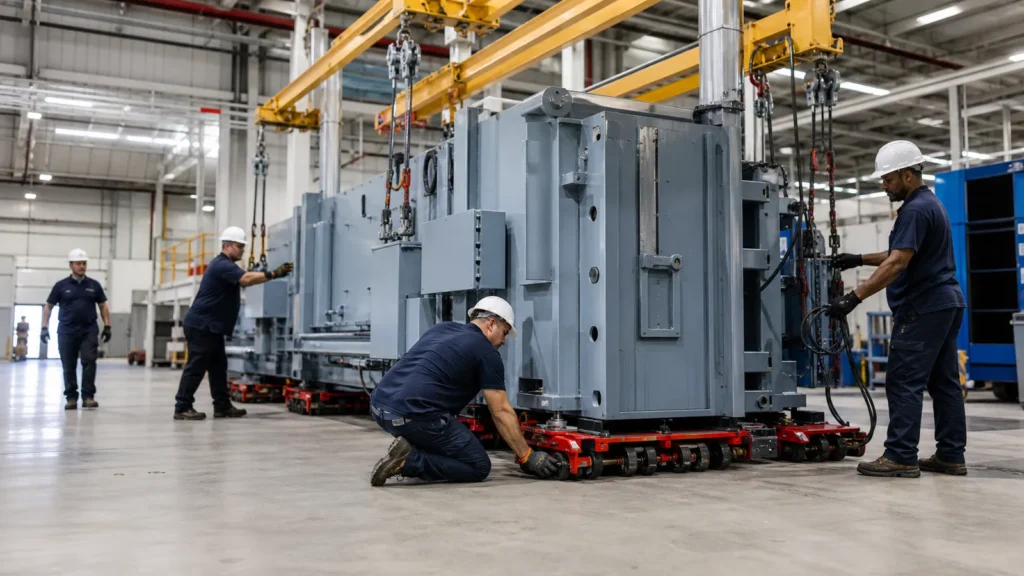
There is a moment in many facility projects when someone looks at a machine, then at the door, and asks the room how exactly that is getting out of the building. That is the moment the project needs machinery movers, a trade with its own equipment, math, and licenses that general moving crews do not carry. Here is what the trade actually involves, so you can scope your project realistically.
Rigging is engineering before it is muscle
Every serious machinery move starts with weights, dimensions, and centers of gravity, taken from manufacturer data plates or calculated on site. From those numbers the rigging plan chooses the method: gantry cranes for controlled vertical lifts indoors, machine skates and rollers for horizontal travel, forklifts rated far beyond the load for staging, and sometimes structural review of the floor along the travel path. A 12,000-pound machining center concentrated on four skate points can exceed a slab’s rating even when the machine sat safely on its own footprint for years. Professional rigging crews run this analysis as a matter of course; the alternative is discovering slab limits empirically.
The equipment list is the point
What separates machinery movers from strong people with dollies is the gear: hydraulic gantries, toe jacks, machine skates, spreader bars, calibrated slings and shackles with load ratings, and trucks with air-ride suspension and the tie-down points heavy loads require. Renting this equipment without the crews trained on it does not produce a safer project, it produces a slower incident.
Permits, escorts, and the road
Once the machine leaves the building, transportation rules take over. Overweight and overdimension loads trigger state permits, prescribed routes, sometimes pilot cars, and travel-time restrictions. Multi-state moves multiply the permitting. Good machinery movers handle this paperwork as part of the job and build the road time into the schedule honestly, because a permit that takes ten business days does not care about your production restart date.
Placement is a millwright’s job
The move ends with the machine set on its new footprint to the tolerances the manufacturer specifies: leveled, anchored, and aligned. Precision equipment often requires leveling to fractions of a millimeter before recalibration, and production schedules depend on getting this right the first time. Ask any machinery mover you evaluate who performs final placement and to what tolerance, and whether they coordinate with your equipment vendor’s technicians for recommissioning.
When to bring them in
The answer is at project design, not at move week. Rigging planning shapes doorway decisions, floor protection, electrical disconnect scheduling, and the sequence in which a production line shuts down. Flood Brothers provides industrial rigging and machinery moving as part of complete facility relocations, which means one project manager owns the machine, the office, and the warehouse contents around it. If your project includes anything too heavy for a hand truck, talk to a commercial specialist and we will bring the load charts.
Keep Reading

November 4, 2026
Moving a CNC Machine Out of an Atlanta Plant, Step by Step
A CNC machine is heavy, top-heavy, and built to hold tolerances. How one gets out of an Atlanta plant and running again somewhere else,…
Read more →
November 4, 2026
Delivering Into Nashville’s New Towers Without Scratching a Thing
Brand-new buildings are the easiest to damage. What to plan before a delivery into one of Nashville's newer towers so the finishes look the…
Read more →
November 4, 2026
Getting Deliveries Into Atlanta High-Rises: Docks, Elevators and COIs
A delivery into an Atlanta tower can fail before the truck leaves the warehouse. The dock, elevator, and COI rules that decide whether your…
Read more →Trusted by industry leaders
Enterprises that count on Flood Brothers
Your team demonstrated a level of urgency and attention to facility protection that I had not seen before.
We highly recommend Flood Brothers without reservation. They were on time, professional, and customer service-oriented.
We are very fortunate to have Flood Brothers as one of our partners, as they are willing to do whatever it takes to provide quality service.
Let's Plan Your Move
Talk to the Team That Does the Work
No brokers and no handoffs. Tell us your timeline and our own crew leads will map the project with you.